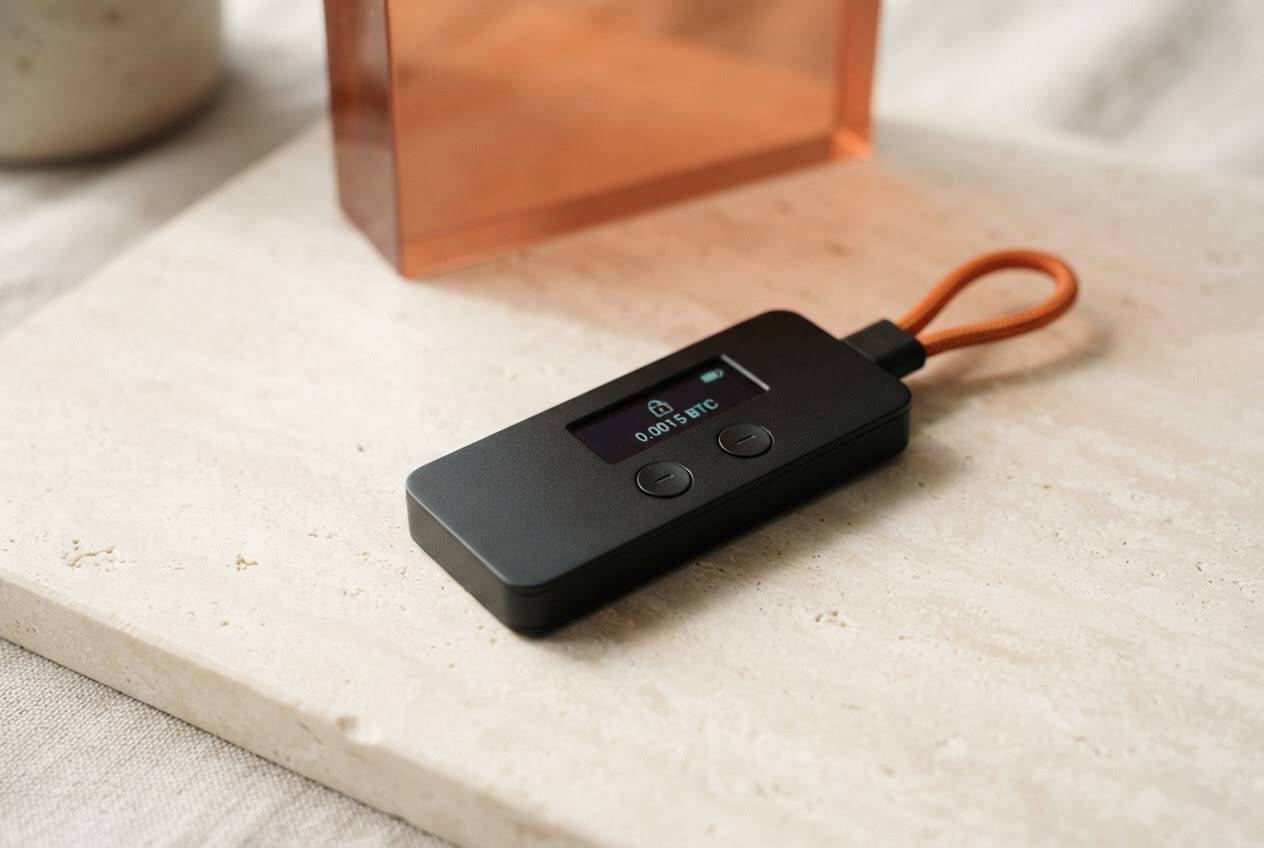
A hardware wallet can make crypto ownership feel less abstract. Instead of leaving your keys with an exchange or on an internet-connected device, you approve important actions with a small device you keep. Here’s how a Trezor fits in—and how to use one with care.
What a Trezor hardware wallet does
A Trezor is a physical device that helps generate and protect the secret information used to access cryptocurrency. Coins do not sit inside it; transactions live on their blockchains. The wallet safeguards private keys that authorize changes to your balances.
To send funds, compatible software prepares a transaction on your computer or phone. The Trezor lets you review and approve it on the device, then signs without exposing private keys to the connected computer. The signed transaction is broadcast to the network.
The device protects your keys; your recovery backup protects your ability to get them back.
A hardware wallet is not a magic shield or a place where funds are stored like files. It adds a deliberate approval step and isolates key material from many everyday online threats.
Why a hardware wallet matters
Hot wallets keep keys available on an internet-connected device, which is convenient but can expose them to malware, phishing, or unsafe downloads. A hardware wallet is designed to sign transactions inside the device instead of handing keys to your browser.
On supported models, the screen lets you check transaction details or a receiving address before approval. Capabilities vary by device, software, and asset, so follow the instructions for your model.
This is one layer of security, not a guarantee. It cannot protect you if you approve a malicious transaction, reveal recovery words, or install compromised software. Market, network, smart-contract, and exchange risks remain.
Getting started safely
Buy from Trezor or an authorized seller. Check the packaging and device for tampering; if anything looks suspicious, stop and contact official support.
Download Trezor Suite only from Trezor’s official website. Check the address carefully: ads, copied websites, and fake support accounts can lead to convincing imitations. Follow current instructions for your model and install firmware through the official process.
Initialize the wallet on the device and create a new wallet. Never use a recovery phrase supplied in the box or by another person; your device should generate it during setup. Choose a PIN if offered and read each prompt before confirming on-device.
Pause before you approve. If a setup step asks you to type recovery words into a website, email, chat, or computer pop-up, stop. Recovery words belong in the official recovery process on your device—not in a message to anyone.
Your recovery phrase is the real backup
A recovery phrase, or seed phrase, can restore a wallet if its device is lost or damaged. Anyone who gets the words may control the funds, so treat them like a master key—not a password reset code.
Write the words in order and check spelling. Keep the backup offline in a private place protected from discovery and damage. Never photograph it, save it in cloud notes, or paste it into a website. Legitimate support will never ask for it.
Plan how you will find the backup in an emergency without making it easy for others to discover. Extra copies reduce loss risk but create more places to secure. A passphrase, if supported, adds protection; forgetting it can make recovery impossible. Understand the trade-off first.
Everyday use: verify, then sign
Before sharing a receiving address, verify it on your Trezor screen; clipboard malware can replace copied text. Before sending, check the destination, amount, network, and fee in the wallet and on the device.
Try a small transfer first when using an unfamiliar network or address format, and confirm it arrives. Check asset and network support: the same token may exist on several networks, and the wrong choice can make funds inaccessible.
Update your operating system, wallet software, and firmware through official sources. Verify prompts rather than following unsolicited links, and never install unofficial firmware.
Choosing a model for your needs
Trezor’s lineup, features, and supported assets can change. Compare current specifications on its official site. Consider the networks you use, preferred screen and connectivity, and backup options for the exact model.
The most expensive device may not fit everyone. For long-term holding, a clear setup and reliable backup may matter more than extra features; frequent use may make screen and connectivity more important. Confirm software and asset compatibility before buying.
No model removes the need for caution. Security also depends on your software source, recovery backup, computer, and approval decisions.
Common mistakes to avoid
Never share your recovery phrase. Scammers impersonate support, send urgent “verification” links, or offer remote help. No legitimate person needs your words, PIN, or passphrase; contact official support through its website.
Avoid devices with a pre-filled phrase, unchecked approvals, wrong-network transfers, or a backup kept with the device. A balance screenshot or browser extension does not prove your setup is safe.
If your phrase may be exposed, assume the wallet is compromised. Follow official instructions to create a new wallet and move remaining funds after verifying the destination. If funds are gone, distrust anyone promising guaranteed recovery.
Before you call it secure
- Device purchased from a trusted source; setup started from official instructions.
- New recovery phrase generated by your device and stored offline, privately.
- PIN set, if available, and device approval details checked before signing.
- Wallet software and firmware sourced and updated through official channels.
- Small test transaction completed before moving a larger balance.
This guide is educational, not financial or security advice. Product features and supported assets change; verify current instructions for your model with Trezor before acting.